
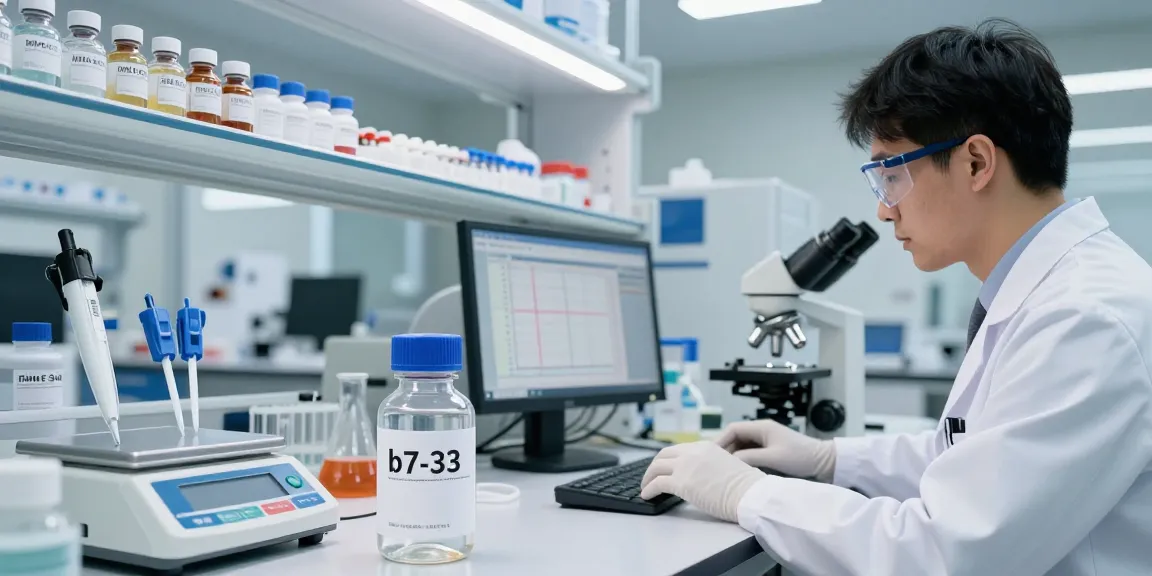
Understanding b7-33: Mechanism of Action and Applications
The peptide b7-33 has gained significant attention in recent years for its potential applications in laboratory research. As researchers increasingly explore the biological significance of this peptide, understanding its mechanisms and possible uses becomes crucial. This article delves deep into the characteristics of b7-33, its mechanisms of action, and the broader implications of its use in various scientific fields. When exploring options, b7-33 for sale offers comprehensive insights for researchers looking to expand their experimental toolkit.
What is b7-33 and Its Biological Significance?
b7-33 is a peptide derived from the protein sequence known for its role in modulating several biological processes. It is primarily recognized for its involvement in cellular signaling and its potential impact on various physiological functions. Research indicates that b7-33 can influence processes such as inflammation, wound healing, and neuroprotection, making it a subject of interest for scientists working in biomedical research. Understanding its biological significance is crucial for researchers looking to harness its potential benefits in therapeutic applications.
Mechanism of Action: How b7-33 Works
The mechanism of action of b7-33 involves its interaction with specific receptors and pathways in cells, which leads to diverse biological responses. Studies suggest that b7-33 may activate signaling pathways associated with cellular repair and regeneration. This peptide can upregulate the expression of genes involved in healing processes and modulate inflammatory responses, indicating its versatility in therapeutic applications. Additionally, ongoing research is exploring its effects on neuronal cells, suggesting potential cognitive enhancement properties.
Research Applications: Potential Uses in Laboratory Studies
The laboratory applications of b7-33 are extensive. Researchers are investigating its role in tissue repair, cognitive function enhancement, and immune modulation. Its use in experimental models could provide insights into various diseases, including neurodegenerative conditions, chronic inflammation, and even skin regeneration. The versatility of b7-33 positions it as a valuable tool for researchers aiming to develop novel therapies rooted in peptide biology.
Current Research Trends in Peptide Studies
The landscape of peptide research has evolved rapidly, with new findings continuously shaping our understanding of their biological roles. In 2026, research trends indicate an increased focus on peptides like b7-33, driven by advancements in molecular biology techniques and a growing interest in personalized medicine. The integration of peptides into therapeutic protocols is becoming more prominent as researchers uncover their multifaceted roles in human health.
Overview of 2026 Research Landscape
The research landscape for peptides in 2026 is characterized by diversification and specialization. Peptides are no longer viewed merely as biological messengers; they are being incorporated into therapeutic frameworks across fields such as oncology, neurology, and regenerative medicine. As breakthroughs occur, such as improved synthesis techniques and delivery methods, researchers are tailoring peptide applications to specific clinical needs.
Popular Peptides Being Investigated Alongside b7-33
Alongside b7-33, several other peptides are under investigation for their potential benefits in laboratory and clinical settings. Notable among these are BPC-157, known for its regenerative properties, and various nootropic peptides, such as Semax, which are being studied for cognitive enhancement. The interplay between these peptides offers exciting prospects for combinatorial therapies that leverage their unique mechanisms.
Emerging Studies: What the Latest Research Reveals
Recent studies focusing on b7-33 and related peptides have yielded promising results, particularly in understanding how these compounds can be integrated into clinical practices. Evidence suggests that b7-33 may enhance wound healing and modulate immune responses. Furthermore, ongoing research is examining its effects on neural pathways, offering insights into its potential applications for treating neurodegenerative diseases.
Legal Considerations for Purchasing b7-33
As interest in peptides like b7-33 grows, so does the need to understand the legal landscape surrounding their purchase and use. In 2026, legislation regarding research peptides continues to evolve, emphasizing the importance of compliance for researchers and institutions.
Understanding the Legal Landscape in 2026
The legal framework for purchasing peptides in the United States and Canada specifies that these compounds are to be used solely for laboratory research and educational purposes. This regulation ensures that peptides are not used in human or animal consumption, which underscores the need for rigorous compliance. Researchers must remain informed about any updates to these regulations to maintain adherence and ensure ethical use.
Regulatory Guidelines for Peptide Research in the US and Canada
In both the US and Canada, regulatory guidelines stipulate that peptides, including b7-33, must be acquired from reputable sources that provide Certificates of Analysis (COA) for each batch. Researchers are advised to verify these documents to confirm the integrity and purity of the peptides they intend to use. These guidelines help safeguard against substandard products that could compromise research integrity.
Common Misconceptions About Research Peptide Legality
There are numerous misconceptions regarding the legality of purchasing peptides like b7-33. Some believe that all peptides are classified as drugs, which is inaccurate. Research peptides are legal to sell and purchase, provided they are marketed strictly for research purposes and not for human consumption. Understanding these nuances is essential for researchers to navigate the regulatory landscape effectively.
Best Practices for Ordering and Handling Peptides
To optimize research outcomes, implementing best practices for ordering and handling peptides is crucial. Understanding how to work with peptides like b7-33 can significantly influence experimental results.
How to Order b7-33: Certification and Quality Checks
When ordering b7-33, researchers should prioritize suppliers that offer comprehensive certification and quality checks. This includes ensuring that the supplier provides a COA for every batch, detailing purity levels, identity verification, and endotoxin testing. By confirming these aspects, researchers can establish a reliable foundation for their studies.
Handling and Storage Guidelines for Research Peptides
Proper handling and storage of b7-33 are essential for maintaining its efficacy. Peptides should be stored in a cool, dry place, preferably at temperatures below -20°C. It is also important to protect peptides from light and moisture, as these factors can degrade their stability. Following these storage guidelines ensures that peptides retain their functional properties for experimental use.
Calculating Reconstitution Concentrations for Accurate Dosing
Accurate dosing is critical when working with research peptides. For example, reconstituting a 5mg vial of b7-33 with 2mL of bacteriostatic water yields a concentration of 2.5 mg/mL. Researchers must be vigilant in calculating concentrations for blends and varying doses to ensure precision in their experiments.
Future Prospects: What’s Next for b7-33 and Peptide Research?
Looking ahead, the future of b7-33 and peptide research holds exciting possibilities. As scientific techniques advance, so too will the understanding and applications of these versatile compounds.
Potential Innovations in Peptide Synthesis Methods
Ongoing research into peptide synthesis methods is likely to yield innovative approaches that enhance the purity and yield of peptides like b7-33. Techniques such as solid-phase peptide synthesis (SPPS) using advanced strategies could streamline production and enable the synthesis of more complex peptide structures.
Future Trends in Research Applications for b7-33
The potential applications for b7-33 are expanding as researchers identify new mechanisms of action and therapeutic uses. Future research may delve deeper into its neuroprotective properties and its role in modulating immune responses, paving the way for novel therapeutic interventions in regenerative medicine and neurology.
Expert Predictions for Peptide Research Advancement in 2026
Experts predict that peptide research will continue to grow, driven by technological advancements and an increasing understanding of peptide biology. As synthetic methods improve and more peptides are synthesized, researchers will likely discover more opportunities for clinical applications. This will further establish peptides like b7-33 as crucial components in the biomedical research landscape.
Frequently Asked Questions
What are the legal restrictions for purchasing peptides?
Legal restrictions for purchasing peptides like b7-33 focus on their intended use. In the US and Canada, these compounds can only be purchased for laboratory research and educational purposes. They are not approved for human or animal consumption and must be sourced from suppliers that adhere to regulatory compliance.
How should b7-33 be stored for optimal efficacy?
To maintain the efficacy of b7-33, it should be stored at low temperatures, ideally below -20°C, and protected from light and moisture. Proper storage is essential to preserve the peptide’s functional properties for research purposes.
What other peptides are commonly used in conjunction with b7-33?
Research into peptides often involves combinations to harness synergistic effects. Commonly paired peptides with b7-33 include BPC-157 for regeneration and Semax for cognitive enhancement. These combinations can potentially amplify therapeutic effects in research settings.
What are the common research applications for b7-33?
Common research applications for b7-33 include studies on tissue repair, immune modulation, and cognitive enhancement. Its versatility makes it suitable for a variety of experimental models aimed at understanding complex biological processes and potential therapeutic interventions.
How to verify the quality of purchased research peptides?
Verifying the quality of purchased research peptides involves obtaining and reviewing a Certificate of Analysis (COA) from the supplier. This document should detail the purity, identity, and test results for each batch, ensuring that the peptide meets the required standards for research use.