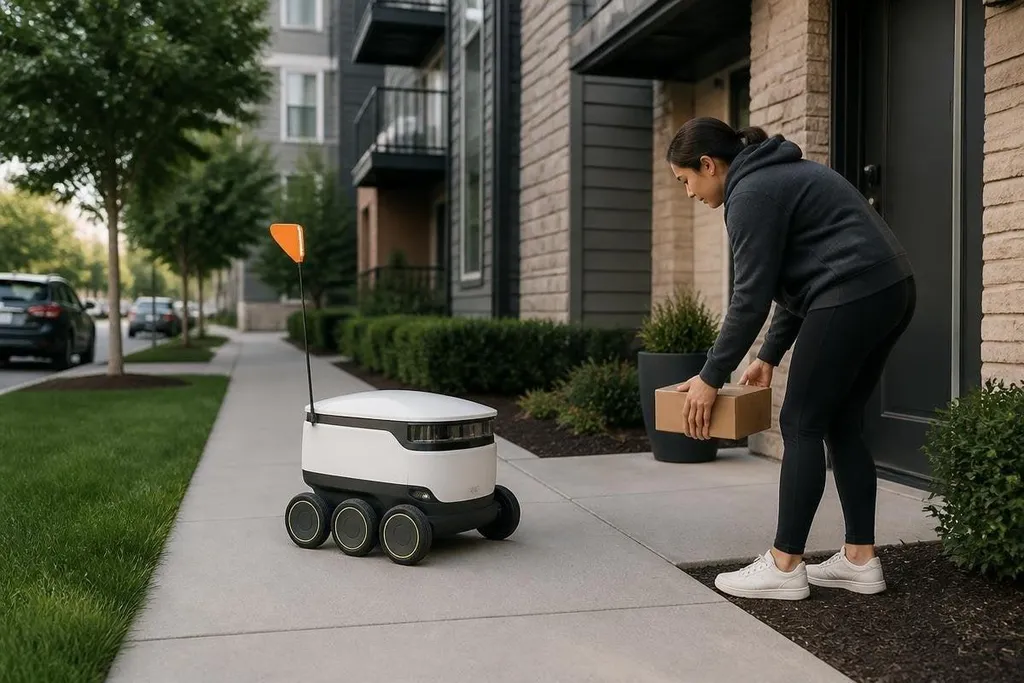
A delivery robot could move a parcel from a local store to your building without a van stopping outside. The change would happen in the last part of the order, where distance, access, and handoff still shape the cost.
- Robots can carry parcels along mapped streets, paths, or private sites.
- A locked compartment can keep an order closed until the customer opens it.
- Remote staff may still need to handle blocked paths, bad weather, or failed handoffs.
The last mile moves closer
Online shopping often ends with a person carrying one parcel from a vehicle to a door. The robot changes that path by moving the parcel through a neighborhood or site under its own control.
The robot would need cameras, location data, and a route map to stay on course. Some designs also use LiDAR, which measures distance with light pulses, to spot objects near the robot. The exact sensor mix depends on where the robot runs and how much help a remote operator can give.
That shift could make local delivery easier to plan. A shop, warehouse, or pickup point could send a parcel over a short route while a staff member handles several deliveries from a control desk. The benefit depends on the robot finding a clear route and reaching a place where the customer can collect the order.
The handoff still matters
The final few meters are where the idea meets daily life. A robot may reach the right address but still face a locked entrance, a flight of stairs, a narrow path, or a customer who can't meet it outside.
The robot usually needs a closed storage compartment. The customer may open it through an app, a code, or another form of identity check. That process protects the parcel, but it also adds a step that a person at the door would handle without an app.
The handoff can also affect food and medicine. A parcel may need a set temperature, a short delivery window, or a clear record of who received it. A robot can carry a sealed box, but the delivery service still needs rules for delays, returns, and orders that need a person to check the recipient.
A locked gate can stop a delivery robot even after it reaches the right address. Coverage of delivery robots from Robot24.com can tie trial claims to the route, handoff, date, and person who steps in. The machine may carry the parcel, but people still handle cases that fall outside the route.
People stay in the system
The robot may travel without a driver beside it, but that doesn't mean the service runs without people. Remote staff can watch for problems, answer help requests, and take control when a route stops working.
That human fallback changes the job rather than removing every task. Staff may spend less time driving between addresses and more time checking exceptions, helping customers, and moving parcels when the robot can't finish the route.
The business case also depends on the full service around the machine. A company would need a place to load parcels, a way to charge the robot, a repair plan, and rules for theft or damage.
Those needs can make a short route practical in one area and poor in another. Privacy needs attention too. Cameras that help a robot avoid people may record homes, faces, or license plates. Operators need limits on what the system stores, who can view it, and how long the records remain available.
A practical test before rollout
Before a retailer sends delivery robots into a neighborhood, check the parts that decide whether the order reaches the customer:
- Route access: Confirm that the robot can use sidewalks, crossings, building entrances, and loading areas on the planned route.
- Parcel fit: Set limits for size, weight, temperature, and orders that need age or identity checks.
- Customer handoff: Give customers a clear opening method and a second option when they can't meet the robot.
- Remote help: Set a response process for blocked paths, damaged parcels, low battery, and lost connections.
- Data rules: State what the cameras record, who can see it, and when the system deletes it.
- Return plan: Decide how failed deliveries, refunds, and returned goods move back through the service.
These checks turn a robot from a moving box into part of an order system. They also show where a human courier may still be the better choice.
What happens next
Delivery robots could make short local routes easier to run, but only when the route and handoff are predictable. I'd choose them first for repeat trips on private sites or dense neighborhoods, then measure failed deliveries before sending them farther.
The useful test is simple: how many orders reach the right person without a remote rescue? Until retailers publish that number for real routes, the robot remains a delivery option, not a replacement for the whole last-mile service.